
The Case for Cryonics
Support and Evidence
The Case for Cryonics
Will cryonics work?
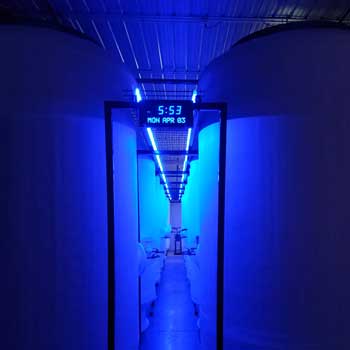
“Can you successfully reverse cryonic suspension,” i.e. “can you bring someone back?”
While suspended patients cannot be revived with current technology, we in cryonics believe that scientific advances may well make possible the future revival of patients from cryonic suspension. We recognize the uncertainty of any prediction regarding future technology, but the advances that have occurred even since Robert Ettinger wrote the Prospect of Immortality in 1964 (from nanotechnology to vitrification to new cryoprotective agents) lead us to believe that the future is on our side. Those who bet against progress have almost always been wrong- and we are betting that the same optimism applies to cryonics.
Damage does occur in the cryonic suspension process, but there are sound reasons to believe that that damage can be limited, especially for patients and their families who are prepared, and can begin the process as soon as possible after clinical death. That is what we are dedicated to achieving for our members.
The evidence supporting cryonics is compelling, so we invite you to explore some of the key arguments below, review our Resource Library for more in-depth information and decide for yourself.

Insights from Robert Ettinger, “The Father of Cryonics”
In 1962, a physics lecturer at Wayne State University named Robert C. Ettinger founded the cryonics movement with the publication of his book The Prospect of Immortality and introduced the world to a groundbreaking concept he termed “Cryonics.”
Ettinger always looked at the concept of cryonics and particularly cryonic revival not as an impossibility, but rather as a complex problem that science would eventually find ways to solve. Considering the current state of technology in 1962, he correctly predicted that science would continue to advance at an explosive rate over the next several decades, ultimately creating the sophisticated tools which would be needed to revive cryonics patients.
Over the course of his first lifetime, Ettinger had the unique pleasure of seeing many of the scientific advances he had predicted decades earlier become reality, further convincing him that the tools and techniques needed to realize his theory were only a matter of time. Ettinger was in the unique position of actually watching his theory coming to life in his own lifetime, and he wrote extensively on the subject of cryonics, clarifying the theory with each new scientific leap forward. Nanotechnology, in particular, has always been a key theoretical revival technique, and Ettinger was fortunate enough to see the first applications of its amazing potential.
Robert Ettinger was placed in cryostasis July 28, 2011 at the Cryonics Institute facility in Michigan at the age of 92. As a scientist, futurist and most of all, “The Original Cryonicist,” Robert Ettinger and his works are the foundation and in many ways the soul of the cryonics movement.
To truly understand cryonics, Robert C. Ettinger’s works are essential reading.
Resource link to Robert Ettinger’s works
Complete list of all documents currently available on the CI web site.
Essential reading – the book that launched the cryonics movement in 1962.
Ettinger’s 1972 follow up to The Prospect of Immortality
A prescient essay discussing the potential of nanotechnology for cryonics applications
Scientists’ Open Letter on Cryonics
* NOTE: Please use the scroll bar inside the box below or click inside the box and navigate using the up and down arrow keys.
Scientific Justification of Cryonics Practice
Published in REJUVENATION RESEARCH Volume 11, Number 2, 2008
Benjamin P. Best for the Cryonics Institute, Clinton Township, Michigan
ABSTRACT
Very low temperatures create conditions that can preserve tissue for centuries, possibly including the neurological basis of the human mind. Through a process called vitrification, brain tissue can be cooled to cryogenic temperatures without ice formation. Damage associated with this process is theoretically reversible in the same sense that rejuvenation is theoretically possible by specific foreseeable technology. Injury to the brain due to stopped blood flow is now known to result from a complex series of processes that take much longer to run to completion than the six minute limit of ordinary resuscitation technology. Reperfusion beyond the six minute limit primarily damages blood vessels rather than brain tissue. Apoptosis of neurons takes many hours. This creates a window of opportunity between legal death and irretrievable loss of life for human and animal subjects to be cryopreserved with possibility of future resuscitation. Under ideal conditions, the time interval between onset of clinical death and beginning of cryonics procedures can be reduced to less than a minute, but much longer delays could also be compatible with ultimate survival. Although the evidence that cryonics may work is indirect, indirect evidence is essential in many areas of science. If complex changes due to aging are reversible at some future date, then similarly complex changes due to stopped blood flow and cryopreservation may also be reversible, with life-saving results for anyone with medical needs that exceed current capabilities.
“Declaration of a leading cryobiologist”
This was excerpted from court records, and retyped, with some changes of format. Original document is on file in reference to Case No. 191277, Kent v. Coroner, Superior Court, County of Riverside, California, Appendix of Declarations, dated Feb. 1, 1988. The cryonics people won the case, and the coroner was enjoined against interfering with the cryonics operation.
For professional reasons, the identity of the author of this declaration has been withheld from this web site.
1. The modern approach to biological vitrification, a potentially revolutionary development in cryobiology promises in the rather immediate future to permit us to achieve the world’s first practical success at organ cryopreservation.
What then would be required for the brain to be restorable? First, the brain must be preserved well enough to repair, i.e. it must be possible today to preserve with some reasonable fidelity the basic biological components of the brains of humans shortly after these humans have clinically died. Second, repair technology must be available to carry out any repairs required.
The two indispensable premises of cryonics, then, are preservation and the development of advanced molecular scale (nanotechnological) biological repair devices. Both premises are fully open to scientific scrutiny and falsification by experiment or calculation and, in fact, both seem at present to withstand such scrutiny. The more detailed declaration testimony which follows documents only the results of scientific tests of the premise of preservation. I understand that K. Eric Drexler will address, in broad scope, the issue of biological repair. To return to the point: If both premises are valid then, assuming the procedure is done under reasonable conditions and non-scientific problems do not intervene, cryonics should work to at least some extent.
Cryobiology and Preservation. It can be stated quite firmly that cell bodies, cell membranes, synapses, mitochondria, general axon and dendroid patterns, metabolites such as neurotransmitters, chemical constituents such as proteins and nucleic acids, and general brain architecture are preserved reasonably well or excellently with current techniques. The brain can withstand severe mechanical distortion by ice without impairment of subsequent cognition, and a glycerol concentration of 5.15M can be shown to limit ice formation to quantities currently thought to be consistent with good function or recovery of the intact brain. Information is lacking about the ultrastructure of frozen thawed brains, but much can be inferred from the customary observation of a high level of functional recovery of frozen thawed brains, brain tissue or brain cells which depends on a high degree of both local and long range ultrastructural integrity. Absolute proof is lacking about the quality of preservation in each and every brain region, since not all brain regions have been examined by neurobiologists to date. However, in my experience, no clear differences in preservation quality from one brain region to another have ever been apparent to me while examining entire cross-sections of the frozen – thawed brain at many different levels.